KAWASAKI 92059-503 Jet Ski Fuel Filler Hose Gas Tube Pipe
fits model: Js440, 440. make: Kawasaki. year: 1979.
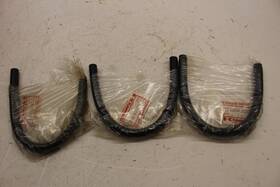
( Manufacturer Part Number: 92059-503 ), ( Type: Fuel Fill Tube ), ( Country Of Origin: Japan )
Review KAWASAKI Jet Ski Fuel Filler Hose Gas Tube Pipe fits JS440 440 1979
The **Kawasaki 92059-503 1979 Jet Ski 440 (JS440) Fuel Filler Hose/Gas Tube/Pipe** is a meticulously crafted, high-performance replacement component designed to restore optimal fuel flow and reliability to your classic Kawasaki JS440 jet ski. This original-equivalent or high-quality aftermarket hose is engineered to withstand the demanding conditions of marine fuel systems, ensuring a secure and leak-free connection between the fuel tank and the carburetor or fuel pump. Constructed from durable, flexible, and corrosion-resistant materials likely reinforced with synthetic rubber or neoprene this hose maintains its integrity under the constant stress of vibration, heat, and exposure to gasoline vapors, which can degrade standard rubber over time. The precise fit of this hose, tailored to the 1979 JS440 s fuel system, eliminates common issues such as fuel spillage, air leaks, or clogging, thereby enhancing engine performance and longevity. Whether you re restoring a vintage jet ski for show or preparing it for high-speed cruising, this hose is an essential upgrade to prevent fuel-related malfunctions and ensure a smooth, efficient ride. Its compatibility with Kawasaki s original specifications guarantees seamless integration, while its robust construction promises durability for countless hours of use. For enthusiasts and mechanics alike, this part is a straightforward yet critical investment to maintain the integrity of your JS440 s fuel delivery system.
Buying a used Kawasaki Jet Ski, specifically a 1979 model JS440 with the fuel filler hose (part number 92059-503) in need of replacement, involves several considerations. Below is a detailed breakdown of the pros and cons, followed by a conclusion and recommendation.
---
### **Pros of Buying This Jet Ski**
1. **Classic and Collectible Value**
The 1979 Kawasaki JS440 is one of the earliest production models of Kawasaki s personal watercraft line. As one of the pioneers in jet ski history, it holds nostalgic and collectible value for enthusiasts. If you appreciate vintage machinery or have an interest in the evolution of jet skis, this could be a rewarding purchase.
2. **Potential for Restoration**
The JS440 is a relatively simple design compared to modern jet skis, making it easier to restore or modify. With the right skills and resources, you could bring it back to working condition or customize it to your liking. This can be a fulfilling project for someone with mechanical aptitude.
3. **Lower Purchase Price**
Due to its age and lack of modern features, the JS440 is significantly cheaper than newer jet skis. This makes it accessible for buyers on a budget, especially if you re looking for a project vehicle rather than a daily-use machine.
4. **Unique Driving Experience**
The JS440 offers a raw, unrefined riding experience compared to today s high-tech jet skis. The lack of modern conveniences (like electric start, advanced handling systems, or noise reduction) can be appealing if you prefer a more "old-school" feel. The simplicity of the design also means fewer electronic failures to worry about.
5. **Parts Availability**
While not as widely available as parts for newer models, Kawasaki and third-party suppliers still stock some original parts for the JS440, including the fuel filler hose (92059-503). Additionally, the basic mechanical components (engine, drive unit, etc.) are relatively straightforward to source or rebuild.
6. **Fuel Efficiency and Simplicity**
The JS440 uses a two-stroke engine, which is simpler in design and easier to maintain than modern four-stroke outboards. While two-stroke engines are less fuel-efficient and more polluting, they can be cheaper to run if you re using it occasionally.
---
### **Cons of Buying This Jet Ski**
1. **High Maintenance and Wear**
The JS440 is a very old design, and many of its components (engine, drive unit, seals, etc.) are worn out or beyond their useful lifespan. The fuel filler hose (92059-503) is just one example other parts like the impeller, drive belt, and engine internals may also need replacement. This could lead to unexpected repair costs.
2. **Lack of Modern Safety Features**
The JS440 lacks modern safety features such as stable platforms, ergonomic seating, or advanced handling systems. It is also heavier and less maneuverable than today s jet skis, which can make it more difficult to control, especially in rough water or for beginners.
3. **Environmental and Legal Restrictions**
Two-stroke engines like the one in the JS440 are highly polluting and may be restricted or banned in certain areas. Some marinas, lakes, or states have outlawed or heavily restricted the use of two-stroke outboards due to environmental regulations. Check local laws before purchasing.
4. **Limited Performance and Comfort**
The JS440 is not built for high-speed or long-duration rides. It lacks the power, speed, and comfort of modern jet skis, which have improved ergonomics, suspension, and noise reduction. If you plan to use it frequently, you may find it uncomfortable or underwhelming.
5. **Difficulty Finding Skilled Mechanics**
While basic mechanics can work on the JS440, finding someone with specific experience in restoring or repairing vintage Kawasaki jet skis can be challenging. This may require more time and effort to find the right help.
6. **Fuel and Emissions Issues**
Two-stroke engines require a mix of gasoline and oil, which can be messy and less efficient than modern four-stroke alternatives. Additionally, the lack of catalytic converters or emissions controls means it will not meet current environmental standards in many places.
7. **Resale Value**
Even if you restore the JS440, its resale value will likely remain low compared to newer models. It is primarily valuable to collectors or enthusiasts, not as a practical watercraft.
8. **Potential for Hidden Damage**
Without a thorough inspection (or if you re buying blind), there could be hidden issues such as rust, engine wear, or structural damage. The JS440 s age means it may have been stored improperly, leading to corrosion or other problems.
---
### **Conclusion**
Buying a 1979 Kawasaki JS440 with a worn fuel filler hose (92059-503) is a decision that hinges on your priorities. If you are a collector, a mechanical enthusiast, or someone who enjoys restoring vintage machinery, this jet ski could be a rewarding project. The low purchase price and potential for customization make it an attractive option for those who appreciate history and hands-on work.
However, if you are looking for a practical, reliable, and safe watercraft for regular use, the JS440 is not the best choice. Its age, lack of modern features, environmental restrictions, and high maintenance requirements make it more of a novelty or hobbyist item than a functional vehicle.
---
### **Recommendation**
- **Buy it if:**- You are a collector or enthusiast interested in vintage jet skis.
- You have mechanical skills and enjoy restoration projects.
- You are prepared to invest time and money in repairs and modifications.
- You plan to use it occasionally for leisure or display purposes.
- **Do not buy it if:**- You need a reliable, low-maintenance jet ski for frequent use.
- You are concerned about environmental restrictions or emissions.
- You lack experience with two-stroke engines or basic marine mechanics.
- You expect to resell it for a profit in the near future.
**Alternative Options:**If you want a more practical jet ski, consider buying a newer model (even a used one from the 2000s or later) that meets modern safety and environmental standards. Alternatively, if you specifically want a Kawasaki, look for a later model like the JS750 or JS1000, which are more robust and easier to maintain.
Before purchasing, have the jet ski inspected by a mechanic familiar with vintage Kawasaki models, and budget for at least a few hundred dollars in repairs (including the fuel filler hose) to ensure it is safe to operate.
Details:
PARTSPLUSMORE14. Removed From: 1979 Kawasaki Jet Ski 440.
part #: 92059503 prices
- $10.79-$20.00
specifications jetskiintakeez:
- for models: Js440, 440
- for makes: Kawasaki
- for years: 1979
- mpn: 92059-503
- type: Fuel Fill Tube
- country of origin: Japan
general jetskiintakeez:
- condition: New other see details
- Parts Accessories > Personal Watercraft Parts > Intake Fuel Systems
seller jetskiintakeez:
- # reviews: 9396
- city: Plaistow, New Hampshire
- rating: 99.4%
returns jetskiintakeez:
- paid by: Seller
- policy: Returns Accepted
- time: 30 Days
payments jetskiintakeez:
- wallet: Paypal
- credit card: Visa
- other
shipping jetskiintakeez:
- service: Standard
- cost: $13.50
- type: Fixed
- class: Standard
- transit: 4-8 Days
offer jetskiintakeez:
- options: Ship-to-home
- availability: In Stock
- started: February 19, 2026
- quantity: 1
- sold: 0
Kawasaki 92059-503 Is Similar To:
- X2 006-405 Kawasaki Sc Sx Ts Fuel Wsm Jetski Repair Pump Kit 650 (35.3% similar) If you are looking for dolefulness, wind line or Jim black parts, please to go to our hatches and cleats store. Please message for a quote...(June 16th, 2014)
- 01-02-483 Blowsion Fuel Pickup Kawasaki Sxr All Years Clear (26% similar) Includes all fuel line, pickup filters and installation hardware. Even with all three pickups in use you can still internally fill using a regular fuel jug hose. Fits all years kawasaki 750 and Sr. Designed with the option for use as a single, dual and triple pickup this billet beauty is lowest ...(January 15th, 2019)
- 01-02-484 Blowsion Fuel Pickup Kawasaki Sxr All Years Red (26.4% similar) Even with all three pickups in use you can still internally fill using a regular fuel jug hose. Fits all years kawasaki 750 and Sr. Introducing the new blows ion kawasaki fuel pickup. Designed with the option for use as a single, dual and triple pickup this billet beauty is lowest profile lightest ...(January 15th, 2019)
- 01-02-485 Blowsion Fuel Pickup Kawasaki Sxr All Years Blue (27.7% similar) Designed with the option for use as a single, dual and triple pickup this billet beauty is lowest profile lightest weight internal fuel filler available. Fits all years kawasaki 750 and Sr. Includes all fuel line, pickup filters and installation hardware. Even with all three pickups in use you can ...(January 15th, 2019)
- 01-02-486 Blowsion Fuel Pickup Kawasaki Sxr All Years Green (27.5% similar) Even with all three pickups in use you can still internally fill using a regular fuel jug hose. Designed with the option for use as a single, dual and triple pickup this billet beauty is lowest profile lightest weight internal fuel filler available. Fits all years kawasaki 750 and Sr. Introducing ...(January 15th, 2019)
- 01-02-487 Blowsion Fuel Pickup Kawasaki Sxr All Years Orange (25.8% similar) Includes all fuel line, pickup filters and installation hardware. Designed with the option for use as a single, dual and triple pickup this billet beauty is lowest profile lightest weight internal fuel filler available. Fits all years kawasaki 750 and Sr. Introducing the new blows ion kawasaki fuel ...(January 15th, 2019)
- Uscg Stroke 041-170-0 Kawasaki App Mikuni Ski Nos 162 2 Parts Jet Carburetor (29.7% similar) This collection has been compiled over the course of the past sixty years and has so much to offer. I was unable to find the part number on other sites to tell the fitment. The parts are in good condition with a little dust on them...(September 10th, 2014)
- 0703-0543 Blowsion Black Billet Aluminum Gas Fuel Cap For Kawasaki Pwc (14.1% similar) Shipping times will vary depending on the country item is being shipped. Blows ion black billet aluminum gas fuel cap for kawasaki PC . Kawasaki Sr 8/4 40, 550 ,650 all model's, years stand ups and most Sudetenland: 750 SC six pro require fuel door fitting. Electrical parts are not returnable...(September 21st, 2018)
- Zxi Manifold Stx Prices Reed 1100 900 Jet Kawasaki Ski Cage Intake (24.6% similar) We love multiple item winners. Many of the parts from this unit may fit other years, makes, or model's. Seals, gaskets, ball joints, boots, brake pads, bearings, etc. Up for sale is an intake manifold with reed cages in good working condition...(June 1st, 2014)
- Carbs Carburetors Cdk-v Zxi Ski Kawasaki Stx Keihin Cv 1100 Prices Jet Kawi Triple (28.6% similar) Comes as shown with intake manifold, ski did run that these were pulled off of but I always would recommend going through them before water testing...(December 1st, 2014)
- Stx Manifold Intake Oem 1100 00 Nice Kawasaki Pipe Inlet 900 98 Zxi 99 96 97 Prices (16.8% similar) Request a quote if pricing is not listed. Kawasaki intake manifold used and in great condition. Fits those machines shown in the picture above...(December 1st, 2014)